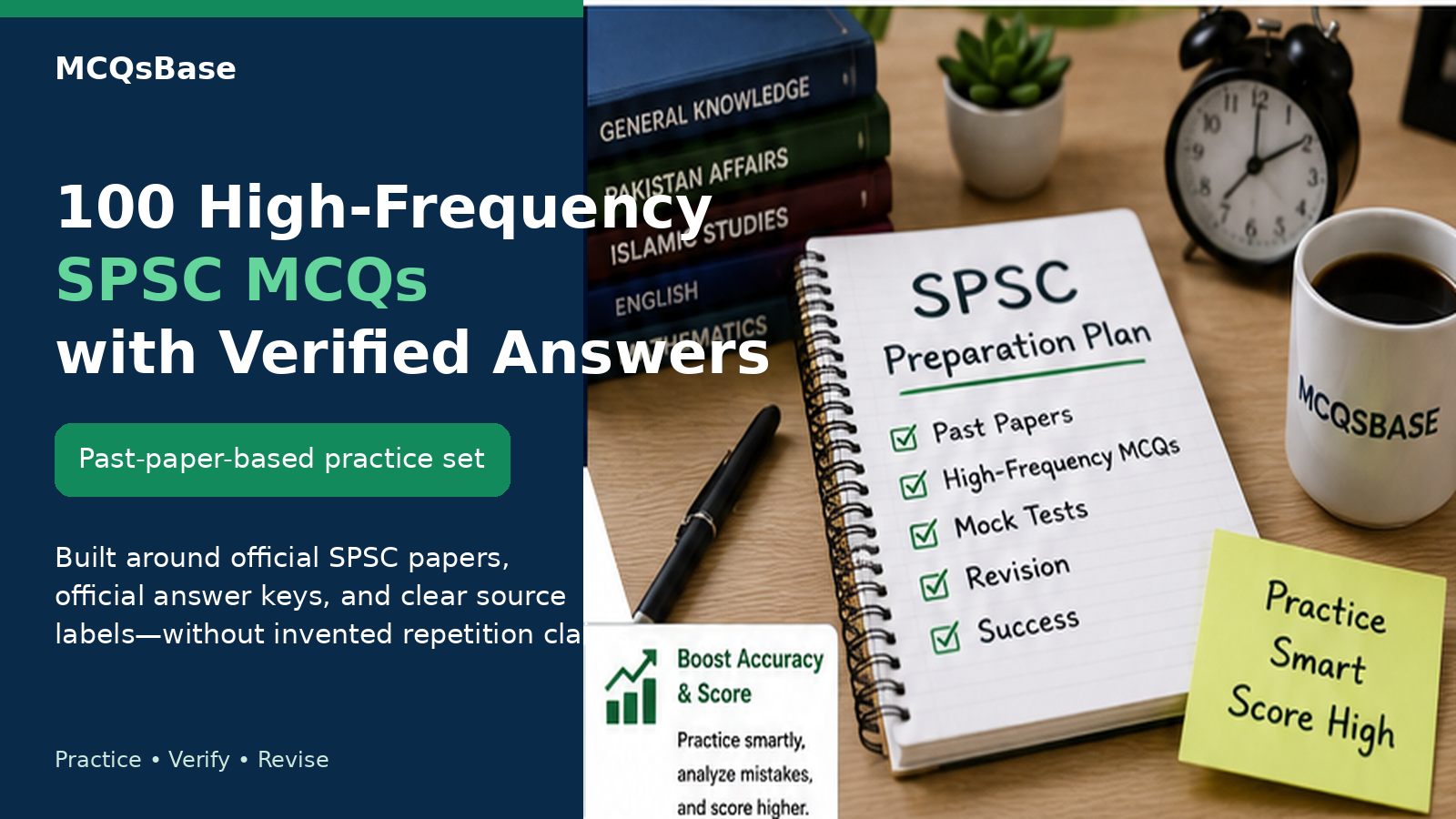
Figure 1. SPSC practice should begin with verified questions, not unsupported "repeat" claims.
100 High-Frequency SPSC MCQs with Verified Answers
I once watched a candidate revise from three screenshots, two forwarded PDFs and one notebook page that looked as though it had survived a rainstorm. The confidence was impressive. The source trail was not. That familiar scene is why this SPSC MCQs guide is built differently: every answer is paired with a short explanation and a source label, while "repeated" is used only when a past-paper trail can genuinely support it.
This article works best when you combine the 100-question set with the official SPSC past-paper archive, the commission's answer-key page and the exact scope and syllabus for your post. The official syllabus remains the boss of the room; this list is the helpful colleague carrying organised notes.
For daily reinforcement, open MCQsBase, work through the full MCQ library, test yourself in the online quiz area and compare your weak topics with the past-papers collection.
Search boxes have seen every possible version of this request: mcqsbase, mcqs base, mcq base, mcqs websites in Pakistan, mcqs preparation, mcqs test preparation, mcqs forum, mcqs test, mcq website, mcq test, online test preparation, mcq com, mcq site, mcq practice, online mcqs and mcqs practice. Different wording, same goal: reliable practice without turning your browser into a digital stationery drawer.
What "High-Frequency" Means Here
Official SPSC pages publish syllabi, selected past papers and answer keys, but they do not provide a single public database proving how many times every MCQ has appeared. So this article does not invent a repetition percentage. The set combines three defensible layers: reported SPSC paper questions, concepts visible across SPSC preparation material, and stable syllabus-aligned facts verified through authoritative references.
An item is described as a reported SPSC question only where a paper archive identifies it that way. Otherwise, it is labelled by its factual or syllabus source. No mystery percentages. No "asked 17 times" fairy dust.
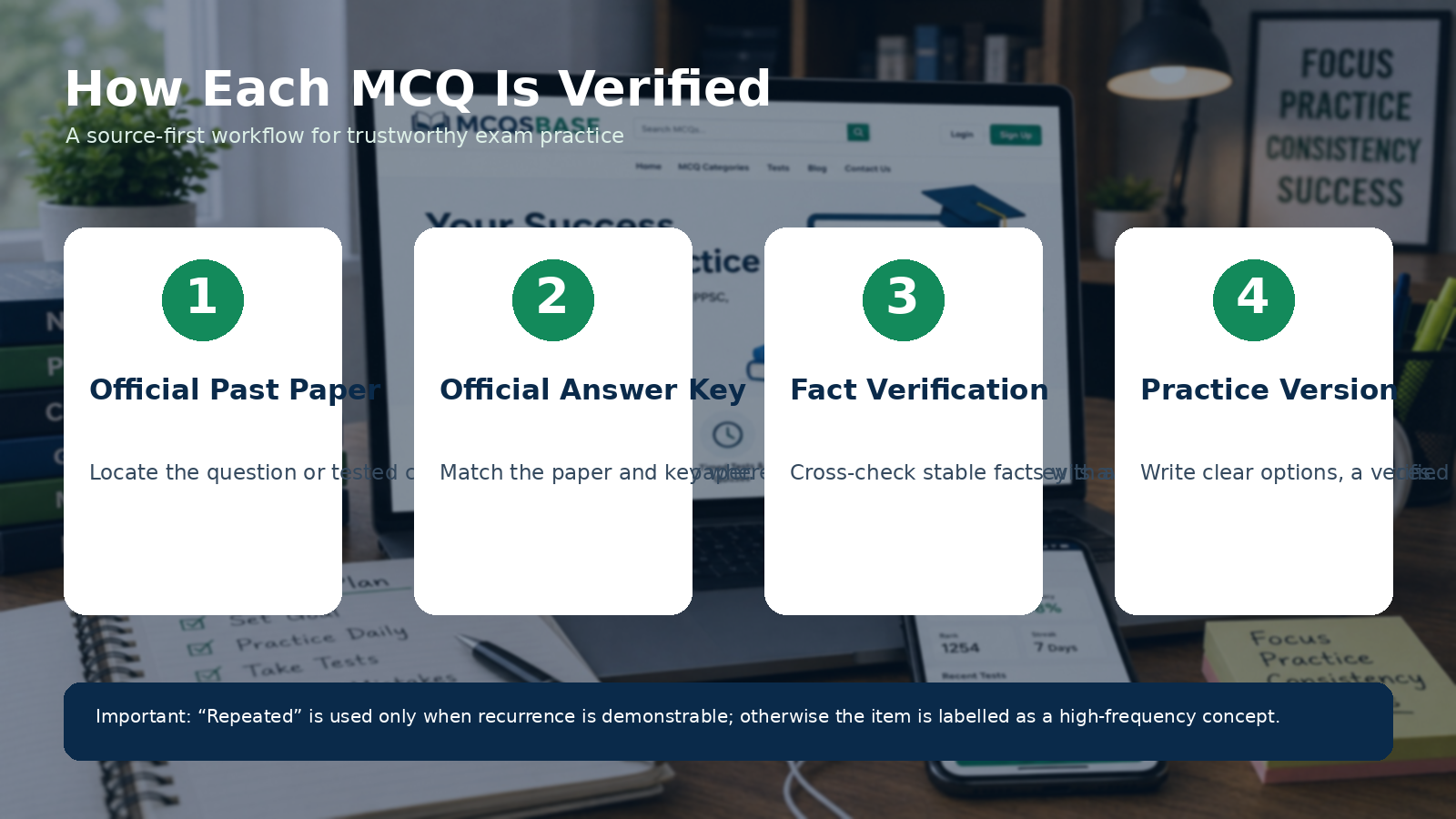
Figure 2. The verification workflow used to separate past-paper evidence from general syllabus-aligned practice.
How the Research Was Structured
| Evidence layer | What it contributes | How it is used |
|---|---|---|
| Official SPSC pages | Past-paper availability, answer keys, rules and post-specific syllabi | Defines scope and confirms that objective tests use published answer keys |
| Reported SPSC paper archives | Question wording and paper-year clues | Used cautiously; every answer is independently checked |
| Authoritative factual sources | Constitution, census, organisations, science and language facts | Used to verify the correct answer and explanation |
| MCQsBase internal structure | Topic-wise practice, quizzes, past papers and study guides | Used for contextual practice links and next-step learning |
Subjects Covered
The set moves through Pakistan Studies MCQs, General Knowledge MCQs, Everyday Science MCQs, English MCQs, mathematics and Islamic Studies MCQs. This broad mix is useful for general screening preparation, but your post-specific syllabus may assign a different balance.
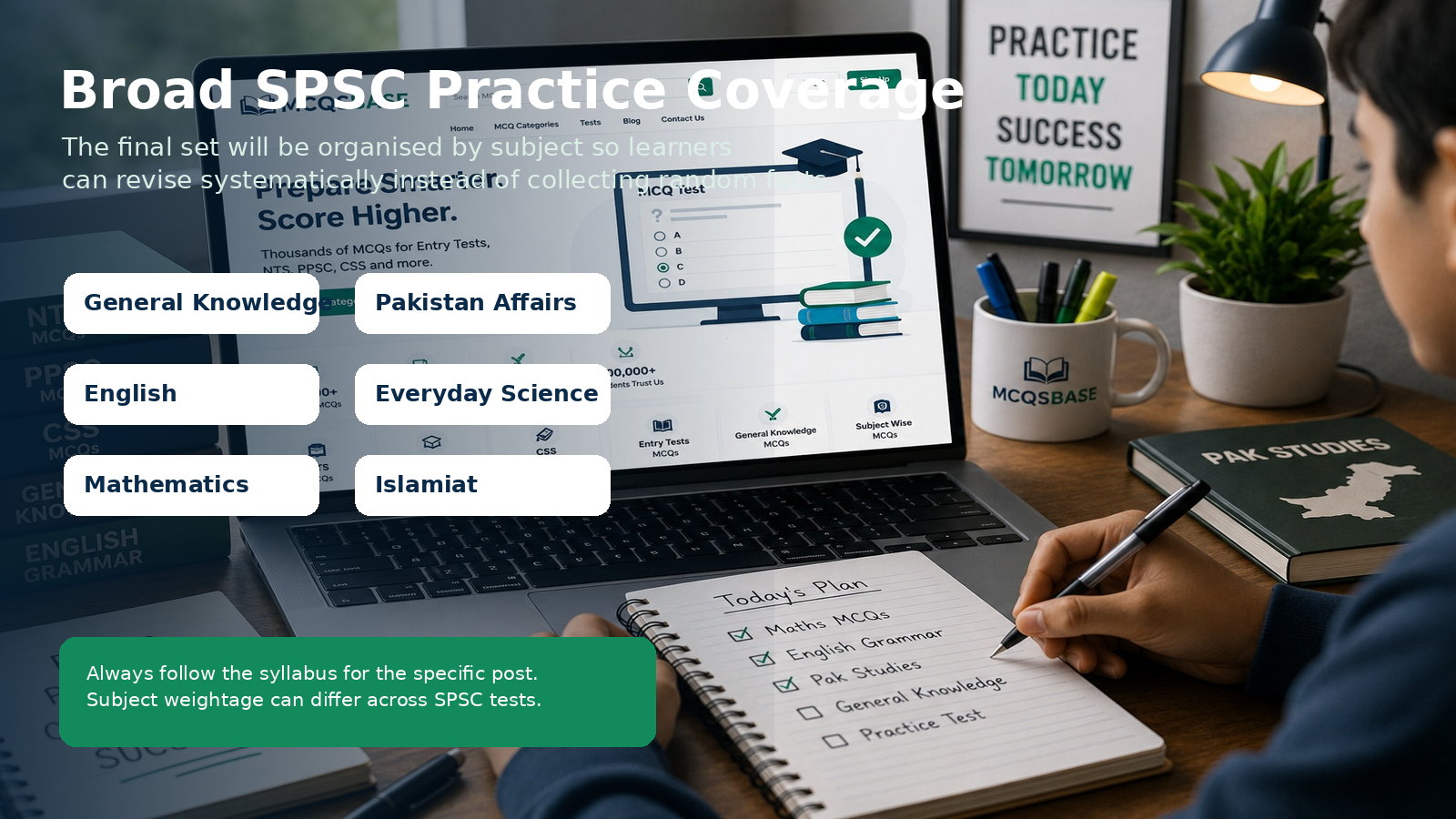
Figure 3. Broad subject coverage for general SPSC screening practice; always adjust it to the advertised post.
How to Use This 100-MCQ Set
- Attempt 20 questions without looking at the answers.
- Mark each mistake by subject, not merely as "wrong."
- Read the explanation and note the source label.
- Open the matching MCQsBase category for another practice round.
- Repeat the missed questions after one day, three days and seven days.
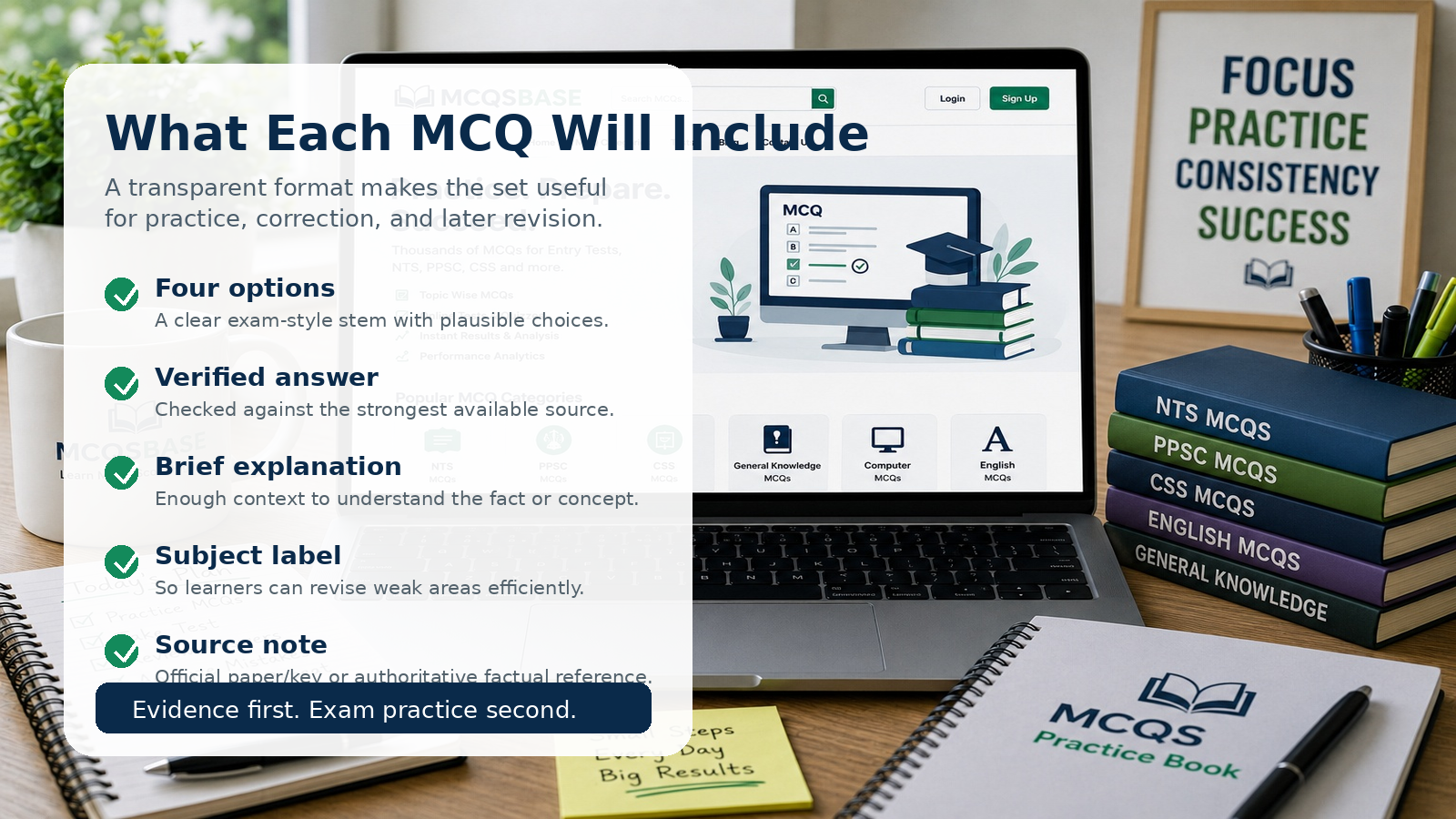
Figure 4. Each question includes options, a verified answer, a short explanation and a source label.
The 100 High-Frequency SPSC MCQs
Use a timer, but do not race like the last samosa has just been announced. Accuracy first; speed follows repeated, reviewed practice.
Part I: Pakistan Affairs and Sindh
After this section, continue with Pakistan Studies practice and compare dates against the past-paper guide.
Pakistan came into existence on:
Correct Answer
A. 14 August 1947
Explanation
Pakistan observes Independence Day on 14 August; the transfer of power occurred in August 1947.
Source: Government of Pakistan / Pakistan history
Who was the first Governor-General of Pakistan?
Correct Answer
B. Muhammad Ali Jinnah
Explanation
Muhammad Ali Jinnah served as Pakistan's first Governor-General from 1947 until 1948.
Source: Pakistan history; common SPSC theme
Who was the first Prime Minister of Pakistan?
Correct Answer
A. Liaquat Ali Khan
Explanation
Liaquat Ali Khan became the first Prime Minister of Pakistan in August 1947.
Source: Pakistan history
The Objectives Resolution was adopted by the Constituent Assembly on:
Correct Answer
A. 12 March 1949
Explanation
The Constituent Assembly adopted the Objectives Resolution on 12 March 1949.
Source: National Assembly / constitutional history
The Constitution of 1973 came into force on:
Correct Answer
B. 14 August 1973
Explanation
The Constitution was passed in April 1973 and came into force on 14 August 1973.
Source: Constitution of Pakistan
Under Article 251 of the Constitution, the national language of Pakistan is:
Correct Answer
B. Urdu
Explanation
Article 251 declares Urdu the national language of Pakistan.
Source: Constitution of Pakistan, Article 251
Article 25 of the Constitution primarily deals with:
Correct Answer
B. Equality of citizens
Explanation
Article 25 states that all citizens are equal before law and entitled to equal protection of law.
Source: Constitution of Pakistan, Article 25
The federal capital of Pakistan is:
Correct Answer
C. Islamabad
Explanation
Islamabad is the federal capital of Pakistan.
Source: Government of Pakistan
The largest province of Pakistan by area is:
Correct Answer
C. Balochistan
Explanation
Balochistan is Pakistan's largest province by land area.
Source: Pakistan Bureau of Statistics / geography
According to the 2023 census, Pakistan's most populous province is:
Correct Answer
A. Punjab
Explanation
Punjab recorded the largest provincial population in the 2023 census.
Source: Pakistan Bureau of Statistics, Census 2023
The national flower of Pakistan is:
Correct Answer
B. Jasmine
Explanation
Jasmine is recognised as Pakistan's national flower.
Source: Government of Pakistan / national symbols
The national animal of Pakistan is:
Correct Answer
B. Markhor
Explanation
The markhor is Pakistan's national animal.
Source: Government of Pakistan / national symbols
Pakistan's first population census was held in:
Correct Answer
B. 1951
Explanation
The first nationwide census after independence was conducted in 1951.
Source: Pakistan Bureau of Statistics; reported SPSC theme
Pakistan became a member of the United Nations on:
Correct Answer
B. 30 September 1947
Explanation
Pakistan was admitted to the United Nations on 30 September 1947.
Source: United Nations member-state record
The first annual session of the All-India Muslim League was held in:
Correct Answer
B. Karachi in 1907
Explanation
The League was founded at Dhaka in 1906; its first annual session was held in Karachi in 1907.
Source: Reported SPSC CCE 2025; historical cross-check
The Partition of Bengal was implemented in:
Correct Answer
B. 1905
Explanation
The partition took effect on 16 October 1905 and was annulled in 1911.
Source: Historical reference; reported SPSC theme
Who was the Viceroy of India at the time of the Partition of Bengal in 1905A. Lord Curzon
Correct Answer
A. Lord Curzon
Explanation
Lord Curzon was Viceroy when the 1905 Partition of Bengal was implemented.
Source: Reported SPSC CCE 2024; historical cross-check
The first railway line in present-day Pakistan opened in 1861 between:
Correct Answer
A. Karachi and Kotri
Explanation
The Karachi-Kotri railway line opened for traffic in May 1861.
Source: Reported SPSC CCE 2025; railway history
The capital of Sindh is:
Correct Answer
C. Karachi
Explanation
Karachi is the provincial capital of Sindh.
Source: Government of Sindh
Mohenjo-daro is located in which district of Sindh?
Correct Answer
B. Larkana
Explanation
The archaeological site of Mohenjo-daro is near Larkana in Sindh.
Source: UNESCO / Sindh archaeology
Part II: General Knowledge and International Organisations
Reinforce these topics through General Knowledge practice sets and the free-resources guide for SPSC candidates.
The headquarters of the United Nations is in:
Correct Answer
B. New York City
Explanation
The UN's principal headquarters is in New York City.
Source: United Nations
The headquarters of the World Health Organization is in:
Correct Answer
B. Geneva
Explanation
WHO is headquartered in Geneva, Switzerland.
Source: World Health Organization
The seat of the International Court of Justice is:
Correct Answer
C. The Hague
Explanation
The International Court of Justice sits at the Peace Palace in The Hague.
Source: International Court of Justice
FATF stands for:
Correct Answer
A. Financial Action Task Force
Explanation
FATF is the intergovernmental body that develops standards against money laundering and terrorist financing.
Source: Reported SPSC CCE 2024; FATF
The headquarters of the Organisation of Islamic Cooperation is in:
Correct Answer
B. Jeddah
Explanation
The OIC General Secretariat is based in Jeddah, Saudi Arabia.
Source: Organisation of Islamic Cooperation
The SAARC Secretariat is located in:
Correct Answer
C. Kathmandu
Explanation
The SAARC Secretariat is in Kathmandu, Nepal.
Source: SAARC
The headquarters of the International Monetary Fund is in:
Correct Answer
A. Washington, D.C.
Explanation
The IMF is headquartered in Washington, D.C.
Source: International Monetary Fund
The headquarters of the World Bank Group is in:
Correct Answer
B. Washington, D.C.
Explanation
The World Bank Group is headquartered in Washington, D.C.
Source: World Bank
The largest continent by land area is:
Correct Answer
B. Asia
Explanation
Asia is the world's largest continent by area.
Source: Geography reference
The largest ocean on Earth is:
Correct Answer
C. Pacific Ocean
Explanation
The Pacific is the largest and deepest ocean basin.
Source: NOAA / geography
The world's highest mountain above sea level is:
Correct Answer
B. Mount Everest
Explanation
Mount Everest has the highest elevation above mean sea level.
Source: Geography reference
The largest country in the world by area is:
Correct Answer
C. Russia
Explanation
Russia is the world's largest country by total area.
Source: World geography
The smallest sovereign state by area is:
Correct Answer
C. Vatican City
Explanation
Vatican City is the world's smallest independent state by area.
Source: World geography
The currency of Japan is:
Correct Answer
B. Yen
Explanation
Japan's official currency is the yen.
Source: Bank of Japan
The Equator is located at:
Correct Answer
A. 0 degrees latitude
Explanation
The Equator is the reference parallel at zero degrees latitude.
Source: Geography reference
The International Date Line generally follows:
Correct Answer
C. 180 degrees longitude
Explanation
It broadly follows the 180th meridian, with deviations around territories and island groups.
Source: Geography reference
Which continent has the greatest number of sovereign countries?
Correct Answer
B. Africa
Explanation
Africa has 54 UN-recognised member states, more than any other continent.
Source: United Nations / African Union
The 2026 FIFA World Cup is being hosted jointly by:
Correct Answer
C. Canada, Mexico and United States
Explanation
The 2026 tournament has three co-host countries: Canada, Mexico and the United States.
Source: FIFA; reported SPSC CCE 2025
The Olympic symbol contains how many interlaced rings?
Correct Answer
B. Five
Explanation
The Olympic symbol consists of five interlaced rings.
Source: International Olympic Committee
Earth's natural satellite is:
Correct Answer
C. The Moon
Explanation
The Moon is Earth's only natural satellite.
Source: NASA
Part III: Everyday Science
For further revision, use the Everyday Science category and read Everyday Science MCQs: Important Topics and Concepts.
The chemical formula of ozone is:
Correct Answer
B. O3
Explanation
An ozone molecule contains three oxygen atoms.
Source: Reported SPSC CCE 2024; chemistry reference
Which colour of visible light has the shortest wavelength?
Correct Answer
D. Violet
Explanation
Within the visible spectrum, violet has the shortest wavelength and highest frequency.
Source: Physics reference; corrected verification
Which planet is known as the Red Planet?
Correct Answer
B. Mars
Explanation
Iron minerals in Martian soil oxidise, giving the planet its reddish appearance.
Source: NASA
The largest planet in the Solar System is:
Correct Answer
C. Jupiter
Explanation
Jupiter is the largest planet by diameter and mass.
Source: NASA
Photosynthesis mainly occurs in which cell organelle?
Correct Answer
C. Chloroplast
Explanation
Chloroplasts contain chlorophyll and are the main site of photosynthesis in plants.
Source: Biology reference
The SI unit of power is:
Correct Answer
C. Watt
Explanation
One watt equals one joule of energy transferred per second.
Source: BIPM / SI units
The SI unit of electric current is:
Correct Answer
B. Ampere
Explanation
The ampere is the SI base unit of electric current.
Source: BIPM / SI units
The approximate speed of light in vacuum is:
Correct Answer
B. 3 x 10^8 m/s
Explanation
The defined value is 299,792,458 metres per second.
Source: BIPM / NIST
The chemical formula of water is:
Correct Answer
A. H2O
Explanation
A water molecule contains two hydrogen atoms and one oxygen atom.
Source: Chemistry reference
At 25 degrees C, a neutral aqueous solution has a pH of:
Correct Answer
C. 7
Explanation
At 25 degrees C, neutral water has a pH of approximately 7.
Source: Chemistry reference
The largest organ of the human body is:
Correct Answer
B. Skin
Explanation
The skin is the body's largest organ by surface area and weight.
Source: NIH / anatomy reference
Which organ pumps blood around the human body?
Correct Answer
C. Heart
Explanation
The heart circulates blood through the pulmonary and systemic systems.
Source: Anatomy reference
Insulin is produced mainly by the:
Correct Answer
B. Pancreas
Explanation
Beta cells in the pancreatic islets produce insulin.
Source: NIH / physiology
Deficiency of vitamin C causes:
Correct Answer
B. Scurvy
Explanation
Prolonged vitamin C deficiency causes scurvy.
Source: NIH / nutrition
Deficiency of vitamin D in children can cause:
Correct Answer
B. Rickets
Explanation
Vitamin D deficiency can impair bone mineralisation and cause rickets in children.
Source: NIH / nutrition
The commonly accepted universal red-cell donor blood group is:
Correct Answer
C. O negative
Explanation
O-negative red cells lack A, B and Rh(D) antigens and are used in emergencies when compatibility is unknown.
Source: Red Cross / transfusion reference
The commonly accepted universal red-cell recipient blood group is:
Correct Answer
B. AB positive
Explanation
AB-positive recipients can generally receive red cells from all ABO and Rh types.
Source: Red Cross / transfusion reference
The atomic number of oxygen is:
Correct Answer
C. 8
Explanation
Oxygen has eight protons in its nucleus.
Source: Periodic table reference
The chemical symbol for gold is:
Correct Answer
B. Au
Explanation
Au comes from the Latin word aurum.
Source: Periodic table reference
The most abundant gas in Earth's atmosphere is:
Correct Answer
B. Nitrogen
Explanation
Nitrogen makes up about 78% of the dry atmosphere.
Source: NASA / NOAA
Sound cannot travel through:
Correct Answer
D. A vacuum
Explanation
Sound is a mechanical wave and requires a material medium.
Source: Physics reference
At standard atmospheric pressure, pure water boils at:
Correct Answer
C. 100 degrees C
Explanation
At sea-level pressure, water boils at 100 degrees C, equivalent to 212 degrees F.
Source: Chemistry / physics reference
The freezing point of pure water at standard pressure is:
Correct Answer
A. 0 degrees C
Explanation
Pure water freezes at 0 degrees C, equivalent to 32 degrees F.
Source: Chemistry / physics reference
Plants use which gas during photosynthesis?
Correct Answer
B. Carbon dioxide
Explanation
Plants use carbon dioxide and water to produce sugars during photosynthesis.
Source: Biology reference
The shape of the DNA molecule is commonly described as a:
Correct Answer
B. Double helix
Explanation
DNA consists of two complementary strands arranged in a double helix.
Source: Genetics reference
Part IV: English
Build vocabulary and grammar through the English MCQ category and Mastering English MCQs for Competitive Exams.
Choose the closest synonym of 'abundant':
Correct Answer
B. Plentiful
Explanation
Abundant means existing in large quantities.
Source: Cambridge/Oxford dictionary
Choose the antonym of 'transparent':
Correct Answer
B. Opaque
Explanation
Opaque means not allowing light to pass through and is the opposite of transparent.
Source: Dictionary reference
A man who is womanish in manner is called:
Correct Answer
B. Effeminate
Explanation
Effeminate describes a man regarded as having characteristics traditionally associated with women.
Source: Reported SPSC archive; dictionary cross-check
Choose the antonym of 'frugal':
Correct Answer
C. Extravagant
Explanation
Frugal means economical; extravagant is its opposite in spending.
Source: Reported SPSC archive; dictionary cross-check
Choose the best antonym of 'insolvent':
Correct Answer
B. Financially stable
Explanation
Insolvent means unable to pay debts; financially stable conveys the opposite.
Source: Reported SPSC archive; dictionary cross-check
Choose the correctly spelled word:
Correct Answer
C. Accommodate
Explanation
Accommodate is spelled with double c and double m.
Source: Dictionary reference
The plural of 'criterion' is:
Correct Answer
B. Criteria
Explanation
Criterion is singular; criteria is plural.
Source: Dictionary reference
The noun form of 'decide' is:
Correct Answer
B. Decision
Explanation
Decision is the noun derived from the verb decide.
Source: Grammar reference
A person who can speak several languages is a:
Correct Answer
B. Polyglot
Explanation
A polyglot is a person who knows and can use several languages.
Source: Dictionary reference
The idiom 'once in a blue moon' means:
Correct Answer
B. Very rarely
Explanation
The idiom is used for something that happens very infrequently.
Source: Idiom reference
Choose the closest synonym of 'concise':
Correct Answer
B. Brief
Explanation
Concise means giving much information clearly in few words.
Source: Dictionary reference
Choose the antonym of 'hostile':
Correct Answer
B. Friendly
Explanation
Hostile means unfriendly or antagonistic; friendly is the direct opposite.
Source: Dictionary reference
Choose the correct verb: 'Each of the students ___ present.'A. are
Correct Answer
C. is
Explanation
Each is singular, so it takes the singular verb is.
Source: English grammar
Complete the sentence: 'He has been working ___ morning.'A. for
Correct Answer
B. since
Explanation
Since is used with a starting point in time.
Source: English grammar
Choose the correct passive voice: 'The committee approved the plan.'A. The plan has approved the committee.
Correct Answer
B. The plan was approved by the committee.
Explanation
The object becomes the subject, and the simple past changes to was approved.
Source: English grammar
Part V: Mathematics and Analytical Ability
Use the online quiz area for timed practice, then apply the method in Time Management Strategies for Competitive Exams.
What is 25% of 240A. 40
Correct Answer
C. 60
Explanation
25% is one quarter; 240 / 4 = 60.
Source: Arithmetic
What is three-quarters of 200A. 100
Correct Answer
C. 150
Explanation
200 x 3/4 = 150.
Source: Arithmetic
The average of 10, 20 and 30 is:
Correct Answer
B. 20
Explanation
Their sum is 60; 60 / 3 = 20.
Source: Arithmetic
What is the simple interest on Rs. 1,000 at 10% per year for 2 years?
Correct Answer
C. Rs. 200
Explanation
Simple interest = principal x rate x time = 1000 x 0.10 x 2.
Source: Arithmetic
Two numbers are in the ratio 2:3 and their sum is 25. The smaller number is:
Correct Answer
B. 10
Explanation
There are five equal parts; each is 5, so the smaller number is 2 x 5 = 10.
Source: Ratio
The square root of 144 is:
Correct Answer
C. 12
Explanation
12 x 12 = 144.
Source: Arithmetic
What is 15% of 80A. 8
Correct Answer
C. 12
Explanation
0.15 x 80 = 12.
Source: Arithmetic
If 2x + 5 = 15, then x equals:
Correct Answer
B. 5
Explanation
Subtract 5 from both sides, then divide 10 by 2.
Source: Algebra
The area of a rectangle 8 m long and 5 m wide is:
Correct Answer
C. 40 m2
Explanation
Area = length x width = 8 x 5.
Source: Geometry
Find the next term: 2, 5, 8, ___A. 9
Correct Answer
C. 11
Explanation
The sequence increases by 3 each time.
Source: Number sequence
Part VI: Islamic Studies
Continue with the Islamic Studies MCQ category and keep factual notes beside your SPSC past-paper practice.
The first revealed verses of the Qur'an are from:
Correct Answer
B. Surah Al-Alaq
Explanation
The first revelation is traditionally identified as the opening verses of Surah Al-Alaq (96:1-5).
Source: Qur'an 96:1-5 / Islamic studies
The Qibla was changed from Bayt al-Maqdis to the Ka'bah in:
Correct Answer
B. 2 AH
Explanation
The change of Qibla occurred in Madinah in 2 AH and is referenced in Surah Al-Baqarah.
Source: Qur'an 2:144; reported SPSC CCE 2025
Muslims observe obligatory fasting during the month of:
Correct Answer
C. Ramadan
Explanation
Fasting in Ramadan is prescribed in the Qur'an.
Source: Qur'an 2:183-185
How many Surahs are in the Qur'an?
Correct Answer
C. 114
Explanation
The Qur'an is divided into 114 Surahs.
Source: Qur'an structure
Which Prophet is traditionally known as Khatib-ul-Anbiya (Speaker of the Prophets)
Correct Answer
B. Prophet Shu'ayb (A.S.)
Explanation
Prophet Shu'ayb is traditionally given this title because of his eloquence in preaching.
Source: Reported SPSC CCE 2025; Islamic studies reference
Which angel brought revelation to the Prophets?
Correct Answer
C. Jibril
Explanation
Angel Jibril is associated with conveying divine revelation.
Source: Qur'an / Islamic studies
The first Qibla of the Muslims was:
Correct Answer
C. Bayt al-Maqdis (Al-Aqsa)
Explanation
Muslims initially faced Bayt al-Maqdis before the Qibla changed to the Ka'bah.
Source: Qur'an 2:142-144
Zakat is one of the:
Correct Answer
B. Five pillars of Islam
Explanation
Zakat is a foundational act of worship and social responsibility in Islam.
Source: Islamic studies
The Hijri calendar begins with the:
Correct Answer
C. Migration to Madinah
Explanation
The Islamic calendar is reckoned from the Hijrah, the migration from Makkah to Madinah.
Source: Islamic history
How many obligatory daily prayers are prescribed in Islam?
Correct Answer
C. Five
Explanation
Muslims perform five obligatory prayers each day.
Source: Islamic studies
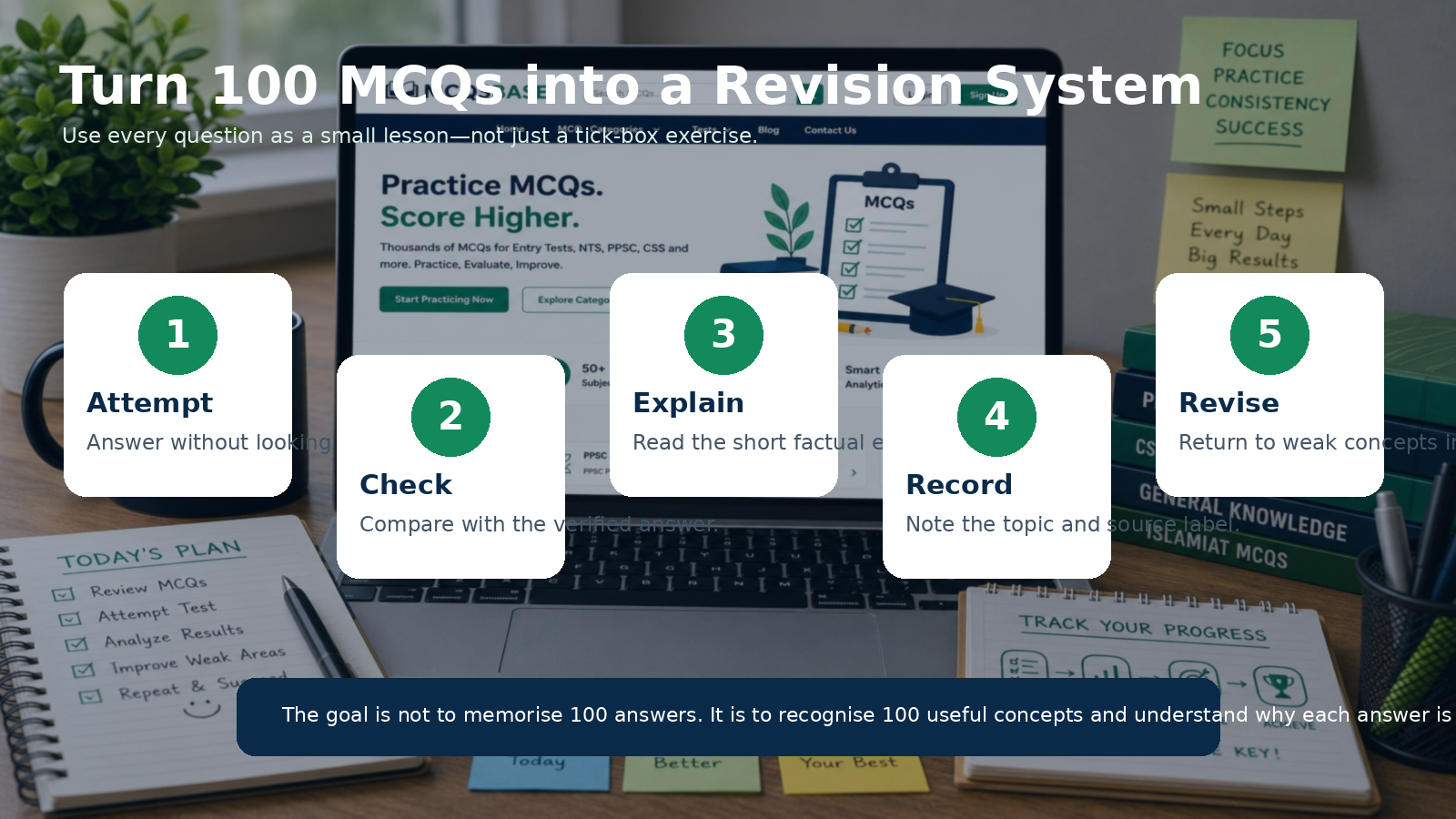
Figure 5. Convert the question bank into a repeatable attempt-check-explain-record-revise loop.
What Your Score Means
| Score | Interpretation | Next action |
|---|---|---|
| 85-100 | Strong broad recall | Shift toward post-specific syllabus drills and full timed tests. |
| 70-84 | Good foundation | Review mistakes by subject and repeat weak categories. |
| 50-69 | Developing | Reduce random practice; rebuild concepts before retesting. |
| Below 50 | Needs structured revision | Use smaller topic-wise sets and maintain an error notebook. |
Why MCQsBase Fits This Workflow
A static list helps you revise once. A structured platform helps you practise again, change subjects and test recall. On MCQsBase, you can move from this article to topic-wise MCQs, try a timed quiz, consult past papers and use the exam-preparation blog without building a small museum of browser tabs.
The same content-first approach appears in the guides on why online MCQ practice matters, how practice tests support exam performance and how to choose an MCQ platform in Pakistan.
For education teams building similar searchable study resources, the quiet work behind the scenes matters too: clean web development, technical SEO, content architecture and reliable publishing workflows. That is where a digital services team such as MoreTech Global can support the platform side without turning the learner-facing article into a hard sales pitch.
Frequently Asked Questions
Are these 100 MCQs officially issued by SPSC
No. This is an independently prepared practice set. It uses reported SPSC past-paper questions where identifiable and fills the remaining coverage with syllabus-aligned, fact-checked MCQs. Official papers, syllabi and answer keys remain the final reference.
Why does the title say "high-frequency" instead of "most repeated"
Because a public official count of exact repeats is not available for every question. High-frequency describes recurring subject areas and commonly tested concepts without inventing a repetition number.
Where can I find official SPSC answer keys
Use the Answer Keys section of the official SPSC website and match the post, test date and paper type carefully.
Is this set useful for every SPSC post
It is useful for broad general preparation, but each post can have a different subject distribution. Always download the official scope and syllabus for the exact advertisement and post.
How many questions should I practise daily
Twenty carefully reviewed questions are more useful than 100 rushed guesses. Increase volume only when you are consistently checking explanations and revising mistakes.
Should I memorise all 100 answers
Memorise essential facts, but understand the concept and context. Question wording changes; understanding travels better than a memorised option letter.
How should I revise wrong answers
Maintain an error log with the topic, your wrong choice, the correct reason and a review date. Reattempt after one day, three days and seven days.
Can I use MCQsBase for further SPSC preparation
Yes. Use its topic-wise categories, quizzes, past-paper section and preparation articles as a structured daily practice hub.
Source and Verification Notes
Official SPSC material is the primary reference for exam scope, paper availability, answer keys and test rules. Reported question archives are used only as secondary evidence for wording and paper-year clues. Factual answers were cross-checked against constitutional, governmental, international-organisation, scientific, dictionary or scriptural references as appropriate.
MCQsBase is not affiliated with the Sindh Public Service Commission. Candidates should rely on the official SPSC website for advertisements, eligibility, syllabi, schedules, keys and results.
People Also Read
Once you have finished this practice set, explore the remaining MCQsBase blog for deeper preparation strategies, subject guides and exam workflows. The following articles are especially useful next steps:
Final Word
A hundred questions will not magically carry you into the merit list. They can, however, expose weak areas, sharpen recall and give your revision a clear starting point. Attempt the set honestly, investigate every mistake and return to the official syllabus before planning the next round.
Then continue through the MCQsBase blog, practise more online MCQs and take a timed MCQ test. Small, verified steps are far less dramatic than a last-night guess paper-and much more useful.